
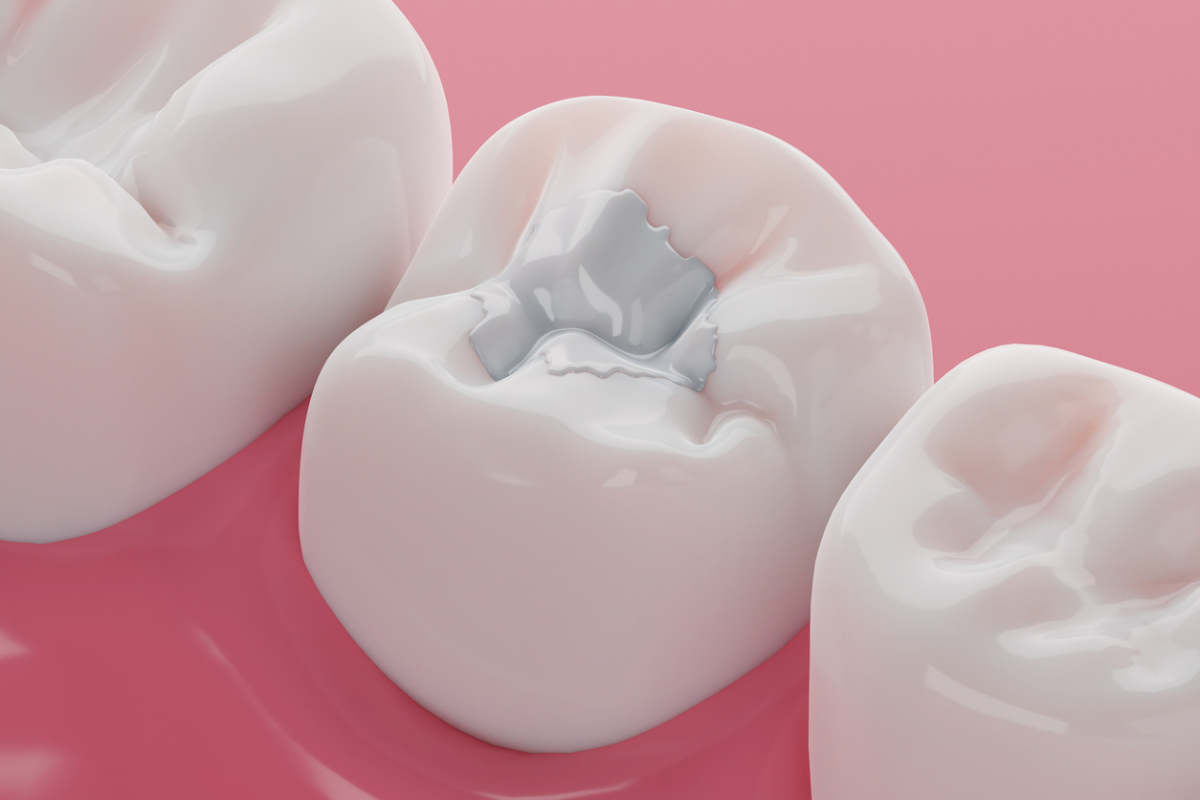
Tooth-colored fillings made of resin composite are the most common solution for treating cavities. But how long do composite fillings last? In this article, we address this question, give tips on dental filling care, and discuss the alternative materials used for dental fillings.
How Long Do Composite Fillings Last?
Resin composite is a tooth-colored material composed of a resin matrix (typically a plastic material, such as Bis-GMA or UDMA) and filler particles (usually glass, quartz, or ceramic) that add strength and wear resistance. It is widely used in dentistry for procedures such as dental fillings, bonding, crowns, and veneers.
Resin composite dental fillings are pretty durable and can last for 5 to 10 years on average. However, the longevity of your dental fillings will depend on the following factors:
- The location of your filling (fillings on teeth that do not get a lot of pressure from chewing food can last longer, for up to 15 years in some cases)
- The size of your filling (larger fillings tend to wear out quicker than smaller ones)
- Your dietary habits (frequent consumption of sugary and acidic drinks and foods can weaken the tooth and bond around the filling.
- Your oral hygiene habits
- Presence of bruxism (involuntary teeth grinding) or such habits as chewing on hard objects or using your teeth as tools
- The skill of your dentist and the quality of the dental filling procedure (improperly placed fillings, for example, with moisture contamination or poor bonding, can fail sooner)
How Long Do Fillings Made of Other Materials Last?
Other materials that can be used for treating cavities are:
- Silver amalgam (lasts for 10 to 15 years)
- Porcelain (lasts for 10 to 15 years)
- Gold (can last for up to 20 years)
However, these materials are typically used to treat larger cavities and are often referred to as onlays or inlays.
Signs That Your Dental Filling Has to Be Replaced
The following signs can indicate that your dental fillings are due to be replaced:
- Cracks or chips in the filling
- Staining or discoloration of the filling or the tooth around it
- Tooth sensitivity to hot and cold foods or drinks, or sugar
- Decay of the tooth underneath the filling (might be indicated by toothache, swelling of the gum around the tooth, bad breath, and tooth discoloration)
We recommend visiting your dentist in a timely manner if you notice any signs of damage in your fillings, as this can lead to reinfection of the tooth. Additionally, if the tooth underneath the filling is infected, the infection can quickly spread to the tooth’s roots, the surrounding gum tissue, and other teeth.
How to Make Your Fillings Last Longer?
There are several rules we recommend following to prolong the lifespan of your dental fillings, regardless of the material they are made from:
- Establish an effective daily oral hygiene routine: brush your teeth twice a day with fluoride toothpaste and floss every evening to prevent plaque and bacteria buildup that can destroy the tooth’s structure around and underneath the filling.
- Avoid hard, crunchy, and sticky foods that can chip, crack, or dislodge your filling.
- Minimize the intake of acidic and sugary food and beverages that can weaken the tooth’s enamel and the filling’s bonding.
- Never use your teeth as tools or chew on hard objects.
- Address bruxism as present.
- Do not skip biyearly professional cleanings and fluoride treatments to maintain your teeth’s health.
- Avoid frequent use of whitening products as hydrogen peroxide can weaken the fillings (especially those made of composite) or affect their color.
Get Long-lasting Dental Fillings at The Smile Artists LA
If you notice signs of cavities on your teeth, do not hesitate to schedule an appointment with an experienced dentist at The Smile Artists LA. Remember that putting off your treatment might lead to more complicated and costly procedures in the future. At our office, we utilize high-quality materials and techniques to provide our patients with reliable and long-lasting dental fillings.





 "The Smile Artists")